

Awarded to the school project that can demonstrate a benefit to the environment and the environmental education of its pupils.
2026 Winner: St. Faith's School, Cambridge
St Faith’s School in Cambridge combines strong academic education with well-embedded environmental leadership and sustainability practice that reflects its commitment to caring for the planet. The school has achieved the Eco-Schools Green Flag with Distinction in recognition of its pupil-led environmental education and sustainable practices. Its Eco Committee, made up of elected pupils from pre-prep through Year 8, drives projects across the school such as recycling, energy-saving, food-waste reduction and Fairtrade work, giving students practical experience in sustainability and leadership.
St Faith’s has implemented a range of energy-reduction measures, including solar panels on several buildings, a Passivhaus-standard building that requires minimal heating, LED lighting, advanced energy monitoring systems and water-saving features such as large rainwater storage and waterless urinals. These measures are supported by regular monitoring and by pupils participating in energy-saving campaigns that reduce consumption and carbon emissions across the campus.
Sustainable travel is also encouraged with a formal School Transport Strategy and Travel Plan promoting car sharing, use of apps to coordinate shared journeys, and cooperative work with local schools to reduce traffic and emissions from school runs. Beyond infrastructure, the school integrates environmental awareness into the curriculum, outdoor activities and community engagement, empowering pupils to become “Green Leaders” who take initiative and reflect on environmental challenges in meaningful ways.
Commended
Ashley Down Primary School, Bristol
Ashley Down Primary School in Bristol has developed a strong environmental practice that embeds sustainability into everyday school life and gives pupils practical experience of caring for the environment. The school’s Eco Council, made up of pupil leaders, meets regularly with staff “Eco Leads” to plan and champion actions that reduce waste, increase recycling, cut energy use and promote environmental awareness across the school community. Students take ownership of initiatives such as litter-picking, recycling drives and energy-saving campaigns, helping their peers understand how small changes can make a big difference.
A key part of the school’s environmental work is encouraging active travel. With support from Bristol City Council’s sustainable travel programmes, pupils and families are encouraged to walk, cycle or scoot to school, reducing car use and improving air quality around the school gates. The school provides walking route maps and promotes alternatives to driving, reinforcing healthy habits that also benefit the environment.
Children also engage with wider environmental education through projects such as the “One Tree per Child” initiative, where pupils planted apple and pear trees to nurture and care for, enhancing biodiversity and creating a lasting green legacy in the school grounds and local neighbourhood.
St Andrew’s Church School, Somerset
St Andrew’s Church School in Bath, Somerset has a growing reputation for practical environmental initiatives that weave sustainability into daily school life and learning. The school builds on its “Green Classrooms” ethos, using its city-centre location to promote connections between pupils, nature and wellbeing, including maximising natural light and fostering green spaces that support biodiversity and healthier learning environments.
A key part of the school’s environmental practice is its Climate Action and Sustainability Plan, which aims to monitor and reduce energy use, replace older lighting with energy-efficient LEDs and motion-sensor controls, and explore solar power generation — all designed to lower the school’s carbon footprint while educating pupils about energy conservation and climate responsibility.
Pupils are actively involved through eco-focused activities, such as air quality awareness, outdoor learning, tree and wildflower planting, and participation in sustainable travel schemes that encourage walking or cycling to school — helping reduce vehicle emissions locally.
The school also participates in sustainable travel recognition, having earned the Modeshift STARS Bronze: Good Travel Plan Award for encouraging walking, cycling and other low-emission travel choices. St Andrew’s is recognised as an Eco School, having achieved the Eco Schools Green Flag award, reflecting sustained action in areas such as biodiversity, litter reduction and global citizenship.
Park Community School, Hampshire
The Park Community School in Havant, Hampshire, is increasingly focused on environmental action and net-zero aspirations as part of its broader commitment to sustainability and preparing students for a changing world. While the school has long engaged pupils in environmental activities such as its Greenpower electric car project and Market Garden, it also aligns with national efforts to cut school carbon emissions through participation in initiatives like the Let’s Go Zero campaign — the UK’s zero-carbon schools movement that unites schools, pupils and staff in a pledge to reach zero carbon by 2030 and offers guidance, resources and climate action support to participating schools.
By engaging with Let’s Go Zero, Park Community School and its pupils are encouraged to think strategically about energy reduction, low-carbon behaviour changes and sustainability planning — actions that help reduce energy use, lower emissions and make the school a healthier and greener place to learn. The campaign also invites schools to work collectively with teachers, parents and local communities to drive wider climate action beyond the school gates, boosting awareness and embedding sustainability across school life.
These commitments reflect Park’s broader ethos of student leadership, community engagement and environmental responsibility, equipping young people with practical skills and understanding of climate challenges as part of their education.
Our Lady of Lourdes RC Primary School, London
Our Lady of Lourdes RC Primary School in Wanstead, London E11 has increasingly embedded environmental education and sustainability into its curriculum and school life, helping pupils become confident and caring stewards of the planet. The school participates in the wider Our Lady of Lourdes Catholic Multi-Academy Trust’s environmental strategy, which aims to educate for sustainability and work towards a carbon-neutral estate by reducing energy use, improving building performance and introducing renewable energy solutions across its schools. This strategy supports schools including Our Lady of Lourdes to teach pupils about climate change, resource use and sustainable systems through real-world examples and action.
Within the school itself, pupils engage in environmental learning that cuts across subjects such as science, geography and PSHE, with climate and sustainability topics integrated into lessons to build understanding of ecological systems and human impact. The school also supports active pupil leadership through its Eco-Council, a group of student representatives who meet regularly to promote energy saving, litter reduction, recycling and water conservation in school — for example organising recycling drives and encouraging lights-off campaigns to reduce electricity use.
Beyond classroom learning, the Eco-Council helps lead activities such as World Environment Day events, litter-picking sessions and battery/pen recycling schemes that involve the wider school community, reinforcing positive environmental habits.
This approach not only nurtures environmental awareness among pupils but builds practical sustainability skills and underscores the school’s commitment to caring for creation in line with its Catholic ethos.
Dorothy Stringer School, East Sussex
Dorothy Stringer School in Brighton & Hove has a long-standing commitment to environmental education and sustainability, making it one of the city’s leading Eco-Schools and recipient of the Eco-Schools Green Flag award for nearly three decades. The school has been part of the Eco-Schools programme since 2000, with pupils taking active roles as Eco Representatives and members of the Eco Committee — coordinating recycling schemes, energy-saving campaigns, litter-picking initiatives and walk-to-school programmes that encourage lower-carbon travel and raise awareness of environmental issues.
Dorothy Stringer’s sustainability strategy also extends into the curriculum and outdoor learning. The school runs a Year 7 Environmental Education course that uses its extensive outdoor areas — including woodland, rewilded habitats and a school pond — as “living classrooms” for species identification, habitat management and ecological surveying. These experiences help pupils connect theory with the natural world and build real-world environmental skills.
On the infrastructure side, the school hosts a 54 kW solar panel system and participates in the Energy Sparks programme to monitor and reduce energy consumption, fostering practical understanding of renewable energy and energy efficiency. This integrated approach — blending pupil-led action, curriculum innovation and energy reduction — helps students develop a deep sense of environmental responsibility and prepares them to be active sustainability leaders.
Dulwich College, London
Dulwich College has integrated sustainability across its whole organisation, from energy and emissions tracking to student-led environmental initiatives. The school publishes detailed data on its Scope 1, 2 and 3 carbon emissions and has set short-, medium- and long-term targets for emissions reduction, aiming for significant progress toward a net-zero future. Targets include reducing direct emissions, cutting commuting impacts and engaging suppliers on sustainability — all supported by clear action plans.
In addition to strategy and reporting, students play an active role through pupil-led environmental groups and initiatives such as climate action clubs, sustainability awareness campaigns and projects that scrutinise school energy use and promote greener behaviours across the community. The school’s commitment extends to involving its wider community in sustainability conversations and working with external partners to drive change.
2025 Winner: King's Academy Easthampstead Park
King’s Academy Easthampstead Park is committed to sustainability and fostering environmental responsibility in Bracknell and beyond. The school won the 2024 Eco Rewards Most Improved School Award, logging 3,000 green miles and significantly reducing carbon emissions. Sustainability is embedded in assemblies, collaborations with Reading and Surrey universities, and student-led Eco Council initiatives, such as energy-saving reminders and daily litter picks. The school is also partnering with Make it Wild to promote biodiversity awareness. Through these efforts, the Academy has developed a sustainable model benefiting both the school and community, making it a strong contender for the Environmental Practice Award.
Commended
Balfour Junior School, Kent
Balfour Junior School has embraced the Outdoor Play and Learning (OPAL) programme, transforming play provision to support creativity, social interaction, and environmental responsibility. By incorporating recycled materials like pallets, tyres, and cardboard boxes into play areas, pupils develop problem-solving skills while learning about sustainability. The yellow cap team promotes a clean environment through regular litter-picking. These initiatives have reduced lunchtime behaviour incidents, improved classroom focus, and actively cut waste by repurposing materials. Through risk management education and imaginative play, pupils gain valuable life skills, making OPAL a key driver of both personal development and environmental awareness.
The Wallace High School, Co. Antrim, N Ireland
The Wallace High School, a selective grammar school with 1,200 pupils, is on a net zero journey, tackling high energy costs and environmental responsibility. Efforts include a 1:1 iPad Scheme (reducing paper use), a 2019 LED lighting refit, and a 2022 Carbon Reduction Plan. In 2023, 281 solar panels were installed, saving 42.74 tCO2e and £41,000 annually. 2024 saw six EV chargers powered by solar energy installed. A £2.99 million retrofit project, including air-source heat pumps and insulation, aims to save £85,900 and 148 tCO2e yearly. Wallace leads in school sustainability, inspiring change locally and beyond.
Kingsley School Devon
Kingsley’s Earth Centre, launched in 2019, has made significant strides in sustainability education. The KS3 Diploma offers 1.5 hours of experiential learning weekly, covering biodiversity, fast fashion, and carbon footprint analysis. Student efforts have cut transport CO2e by 6%, reduced 322tCO2e through water conservation, and planted 1,000+ trees this year. The school piloted a L3 Environmental Leadership course with WWF and RSPB, leading community events and research contributions. Surf Academy students earned Gold Level ECOBOARD accreditation for sustainable surfboards. Kingsley actively engages in national environmental discussions, empowering students to lead sustainability efforts in school and beyond.
Henry Maynard Primary School, London
Henry Maynard Primary School's comprehensive Sustainability Curriculum educates students on climate change, with each year group focusing on specific aspects such as deforestation and biodiversity. This curriculum is complemented by hands-on experiences in the school's Kitchen Garden, where students learn about sustainable food production by growing and caring for plants. Annually, the school celebrates Earth Day, featuring activities like assemblies with guest speakers from organisations such as Greenpeace and Solar for Schools, and exhibitions showcasing students' sustainability projects. Additionally, the school has implemented a School Street initiative, restricting vehicle access during peak times to promote safer, cleaner environments. These efforts collectively foster environmental responsibility and community engagement among students.
Liberty Woodland School, London
Liberty Woodland School operates as the UK's first fully outdoor school, fostering a profound connection with nature among students. The campus features eco-friendly infrastructure, including a growing tunnel and a renewable energy centre, constructed using UK-grown Douglas fir timber and weathered corten steel. The school's curriculum integrates environmentalism, teaching students about renewable energy, gardening, and sustainable food production. Recognising its efforts, the Independent Schools Association awarded Liberty Woodland School the Sustainability Award in 2022. Through these comprehensive efforts, Liberty Woodland School cultivates environmental responsibility and sustainable living practices among its students.
The Valley School/Hertfordshire CC, Hertfordshire
The Valley School in Stevenage, in collaboration with Hertfordshire County Council, has achieved a significant milestone by constructing a net-zero carbon operational facility. Completed in December 2023, this £15.8 million project replaced outdated 1960s structures with a modern building tailored for Special Educational Needs (SEN) students. Sustainable features include green roofs, solar panels, and high-efficiency insulation, resulting in an 'A' rated Energy Performance Certificate. The design incorporates triple-glazed windows and energy-efficient HVAC systems, ensuring minimal environmental impact. This initiative underscores the council's dedication to embedding sustainability in public infrastructure, setting a benchmark for future educational facilities.
Hathershaw College, Oldham
Hathershaw College in Oldham demonstrates a strong commitment to environmental sustainability through various initiatives. The school's Eco Committee actively engages students in environmental projects, including conducting audits to reduce single-use plastics within the school community. Additionally, the college has collaborated with educators to promote sustainable practices and environmental education, encouraging students to contribute to a sustainable future. These efforts reflect Hathershaw College's dedication to fostering environmental responsibility among its students and staff.
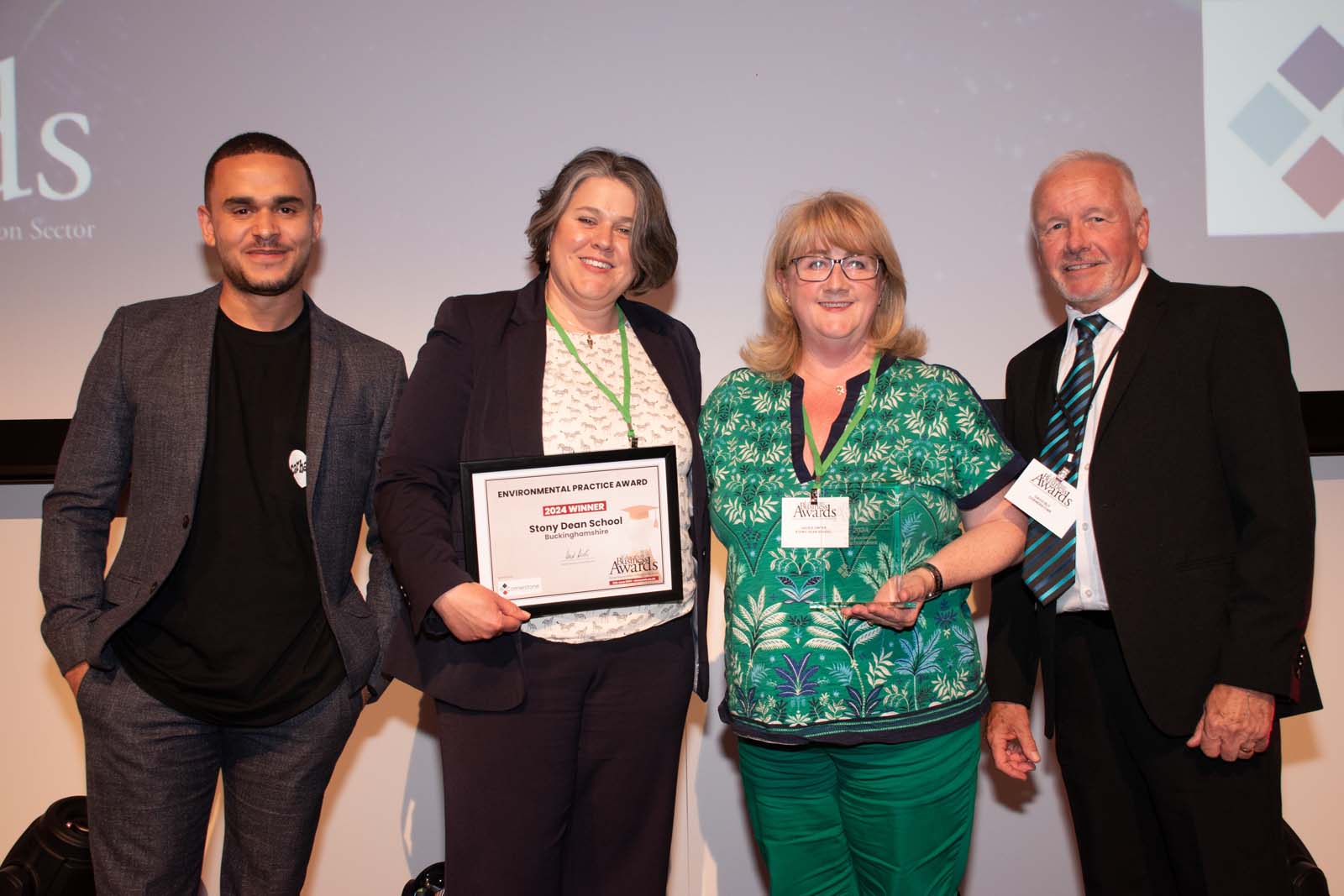
2024 Winner: Stony Dean School
Based in Buckinghamshire, Stony Dean School has worked hard to implement energy saving initiatives towards reducing energy consumption and CO2 emissions. The school takes part in the SAMHE Project - Schools’ Air Quality Monitoring for Health and Education, where pupils use Air Monitors and review the data collected as part of the Science Curriculum. The school’s three minibuses are now electric, while a sustainable procurement policy helps ensure low-impact, fair trade or environmentally friendly suppliers are identified.
Commended
The Wallace High School, Lisburn, Northern Ireland
Highfield and Brookham School, East Hampshire
Wright Robinson College, Manchester
James Allen's Girls School, London
2023 Winner: Kingsley School, Devon
Kingsley School’s environmental ethos runs throughout its curriculum, grounds, practices and its culture. A large solar array across the school site reduces reliance on grid-provided electricity while air source heat pumps at boarding premises reduce the reliance on natural gas. This advances its goal of achieving carbon neutrality by 2027.
Commended
Highfield and Brookham Schools, Hampshire
Stony Dean School, Buckinghamshire
Lockers Park, Hertfordshire
Piper's Corner School, Buckinghamshire
2022 Winner
Castledon School, Essex
Commended
St Aidan's Catholic Academy, Sunderland
Ysgol Dinas Bran, Denbighshire
Coychurch Primary School, Bridgend
2021 Winner
Worle Community School Academy, North Somerset
Worle Community School Academy in Weston-super-Mare, Somerset, has been praised across the world in a competition involving 105 nations. Climate Justice Revolution, which has grown from 4 pupils in 2019 to over 20, won a commendation for Social Media Champions as well as being semi finalists in the international Global Social Leaders competition involving over 600 teams. The school has recently installed two electric car chargers.
Commended
Ysgol Y Foel, Wales
St. Francis Xavier School, North Yorkshire
Leeds East Academy, West Yorkshire
Northgate High School, Norfolk
2020 Winner
Damers First School, Dorset
At Damers all of their eco-work has had a huge reach locally and nationally. The school has worked with their local community, informing everyone how they could reduce their use of plastics. Pupils even put pressure on local businesses leading to one local butchers becoming a zero waste shop. So far, 84 businesses have signed a pledge to remove 3 types of single-use plastic from their organisation. The school works with volunteers from the local community to grow and harvest fruit and vegetables. They have also contacted other local schools to devise a county-wide litter policy. Pupils from Damers have been invited to be a part of Dorset Council’s Climate Change Panel, separately, setting up their own steering group to help make Dorchester as green as possible.
Commended
Ysgol Clywedog, Wrexham
St Dunstans College, London
Cardinal Allen School, Lancashire
Northgate High School, Norfolk
2019 Winner
Bedford Drive Primary School, Birkenhead

Bedford Drive Primary School’s Eco Club started almost ten years ago and has since empowered pupils to improve their environmental awareness and drive change. In 2018, the school was involved in an art installation by Lulu Quinn entitled A Message in a Bottle. Children from the Eco Club were invited along to a workshop with the artist to help in forming the huge sculpture made from one-use plastic bottles, which was then installed at Marine Point in New Brighton.
Commended
Victoria Park Primary School, Bristol
To ensure that the whole school has an input into sustainability, each class at Victoria Park Primary School elects an ‘Eco Rep’. Each year the school’s Green Team team work together using data collated from audits, the school action plan and advice from Eco Schools to establish an action plan of goals for the following year. Past projects have included events such as Waste Week, Switch Off Fortnight and even shoe exchanges.
St Anne’s Church Academy, North Somerset
St Anne’s Church Academy was named North Somerset’s school of the year due largely to its efforts to reduce traffic and encourage children to be more active.
A programme of initiatives including a walk to school campaign, scooter safety sessions and a park and ride shuttle system have all proved popular with pupils and parents. The school has also earned bronze Modeshift STARS accreditation for excellence in promoting sustainable travel.
Denton Community Primary School, Newhaven
New research shows four in ten children are breathing toxic air at school, leaving pupils at an increased risk of developing lifelong conditions including asthma. On March 25, Denton Community Primary School in Newhaven closed the road outside the school to improve air quality and safety outside the school gates. The ’School Streets’ initiative is part of the Big Pedal challenge, a competition to promote cycling, walking and scooting to school, promoted by SusTrans.
Putney High School, London
Two innovative projects in the last year have put wellbeing and green infrastructure at the heart of Putney High School’s learning, development and commitment to the community. Led by an elected student Eco-Committee, Putney’s ‘Breathe’ initiative was designed to make a positive impact on the lives of Wandsworth school children and local residents by tackling environmental issues in the borough.
2018 Winner
Hever Church of England Aided Primary School
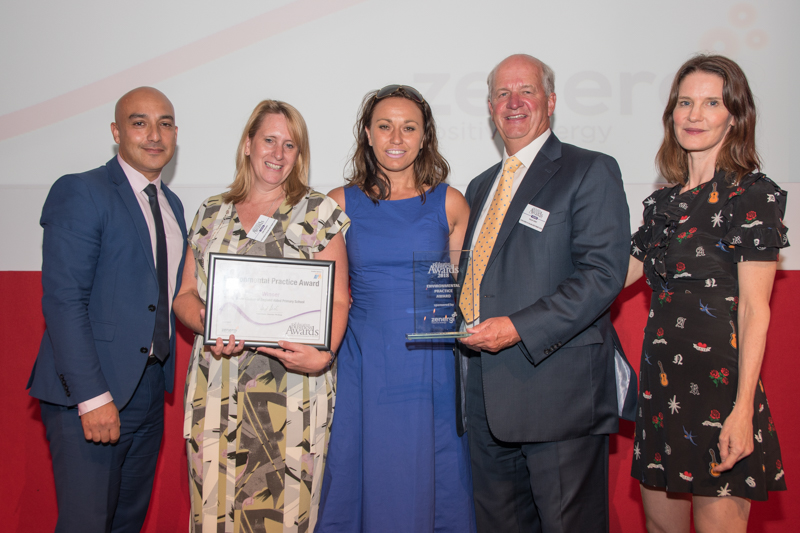
The new 166 square meter double classroom block at Hever Church of England Aided Primary School is as an extremely energy efficient and low-carbon building. Designed and built by Net Zero Building, the block is fully powered by electricity removing the need for a gas supply. The annual electricity consumption for is around 30kWh per m2 per annum as opposed to 120kWh for a traditionally built alternative. The rapid assembly kept disruption to a minimum.
Commended
Thingwall Primary School, Merseyside
Fochriw Primary School, Caerphilly, Wales
London Islamic School, London
St. Mary’s Catholic Primary School, Berkshire
2017 Winner
Gilbrook School
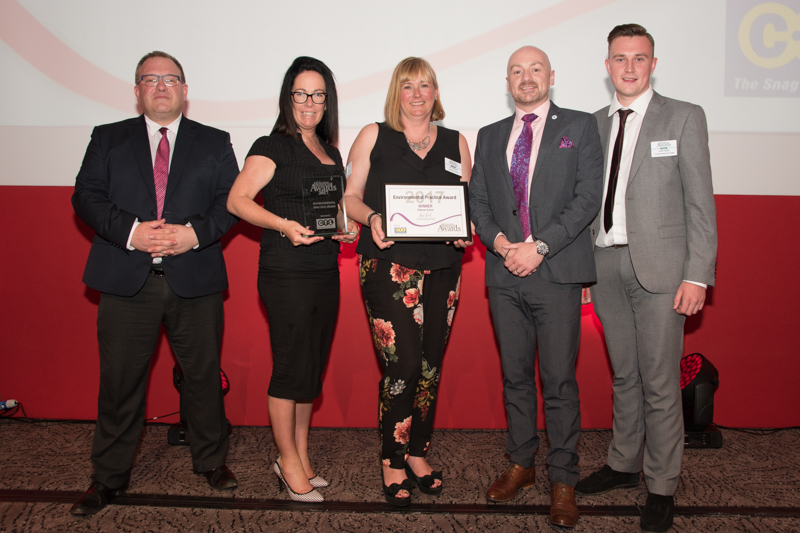
Gilbrook, a maintained primary special school, was invited to help produce a report for a Commons Select Committee inquiry into the future of our parks. The report, Nature is Nurture reinforced the idea that there is a huge, positive impact on children’s mental health when using outdoor space and focused on how green spaces benefit our children. Use of the schools outside area is thoroughly embedded throughout the curriculum. This helps support the mental health and well-being of pupils and staff, and helps pupils understand and act on environmental issues.
Commended
Bootroyd Primary Academy
Bromley High School
Redmoor Academy
2016 Winner
King's Ely, Cambridgeshire
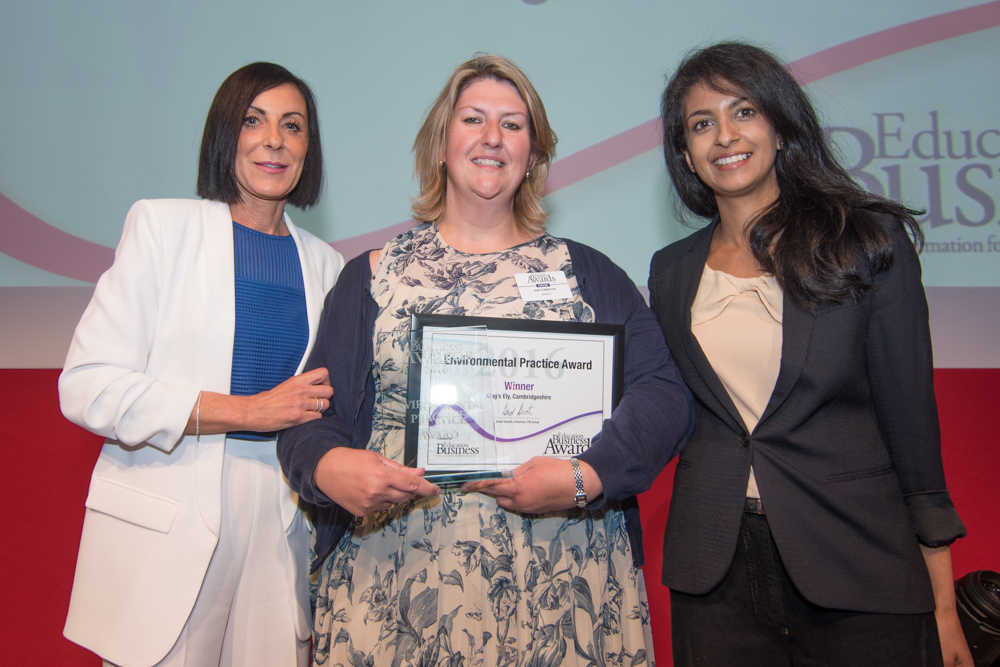
>King’s Ely has become the first independent school in the East of England to win the Modeshift STARS Award for its sustainable transport policies. The scheme encourages schools to increase levels of sustainable and active transport and in so doing, improve the health and well-being of children and young people. King’s Ely promotes the use of cycling and walking to and from school, as well as safer travel practices, both on and off school grounds. The school has been recognised for working with the highways authority on several projects to improve student safety when travelling, and has implemented more school buses and bus routes to reduce the number of individual vehicles travelling on Cambridgeshire roads.
Commended
Mellor Primary School, Cheshire
Benenden School, Kent
King's Ely, Cambridgeshire
2015 Winner
Lutley Primary School, Halesowen
A teaching assistant from Halesowen has won a top award for the environmental projects she started at her school. Lutley Primary School teacher Liz Cole scooped the World Wildlife Fund’s Green Ambassadors Teacher Award 2014 after running a forest school, allotment, eco council and recycling. Head teacher Rebecca Cox nominated Miss Cole for the award and she beat off 200 other hopefuls to win the accolade. At the Awards, the judge said: “I have never before met a person who is so devoted to ensuring that the next generations of children are highly aware of their environment and their impact upon it.”
Commended
St Bartholomew's First School, Crewkerne
strong>South Otterington Church of England Primary School, Northallerton