Sponsored by Chalkie AI
Awarded to the educational establishment in the UK that can demonstrate innovation in its approach to teaching and deploying Information and Communication technologies that further the learning experience of its students.
2026 Winner: Vine Schools Trust, Essex
The Vine Schools Trust has implemented a comprehensive digital strategy that strengthens teaching, learning, and operations. Aligned with the DfE’s 2030 vision, the Trust has established a secure cloud-based network, high-speed broadband, VOIP systems, and Microsoft 365 tools, alongside interactive classroom technology. A full migration to Windows 11 has enhanced security, while a digital equity initiative redistributes devices to pupils, supporting inclusion and reducing waste.
Cyber security is prioritised through staff training and pupil education, supported by national resources and partnerships. A Digital Champion Network and board-level governance ensure consistent implementation and strategic oversight.
The Trust is also advancing the use of AI through a dedicated working group, national pilot participation, and sector collaboration, improving staff expertise and pupil readiness. Ongoing partnerships and innovation ensure a future-focused digital culture that enhances learning, supports staff, and prepares pupils for an increasingly digital world.
Commended
Whitefield Primary School, Merseyside
Whitefield Primary School in Everton, Liverpool, serves a highly diverse and disadvantaged community, with 42% of pupils eligible for Free School Meals, 41% EAL, and 35% SEND. Despite these challenges, it is an Ofsted “Outstanding” school (2024) and a “place of hope,” driven by an innovative PedTech strategy that integrates digital tools to promote equity, inclusion, and independence. iPads and Chromebooks create low-arousal classrooms and “digital working walls,” reducing cognitive load for neurodiverse learners. Software like Read&Write, Chatta, and Kami supports EAL, SEND, and non-verbal pupils, while AI tools enhance creative learning. In 2024/25, 77% of pupils achieved the expected standard in RWM, attendance exceeds national averages, and permanent exclusions remain at zero. Recognised nationally, Whitefield leads as a Liverpool EdTech Hub, hosts visiting educators, and exemplifies how technology can enable all pupils to thrive academically and socially.
Clifton Special School, N Ireland
Clifton Special School in Bangor, County Down has established itself as a leader in innovative use of ICT and digital technology to enhance learning for pupils with a wide range of special educational needs. In **2025 the school was recognised at the Northern Ireland ICT Excellence Award s, where it was named a “digital trailblazer in education” among special schools, highlighting its forward-thinking integration of technology that supports teaching, communication and inclusive learning. Judges praised Clifton for how technology is embedded across learning to benefit pupils’ engagement and outcomes, a distinction supported by senior educational figures and industry sponsors.
Complementing this award, Clifton has also participated in an Education Authority pilot programme using artificial intelligence tools to empower pupils — including those who are non-verbal — to create AI-generated art and music. By allowing students to express preferences and ideas that the AI then translates into creative outputs, the technology opens new avenues for communication, self-expression and confidence building, and has been described by staff as a “game changer” in how learners engage with curriculum content and creative processes. These achievements position Clifton Special School as an example of how ICT innovation — from assistive technology to AI-enhanced learning tools — can expand opportunities and transform educational experiences for pupils with diverse needs.
Lark Rise Academy, Bedfordshire
Lark Rise Academy has been widely praised for its strong approach to coding, cloud adoption and digital curriculum. The school’s commitment to digital learning was recognised through its Outstanding inspection outcomes, with inspectors highlighting a well-sequenced curriculum and high expectations that enable pupils to thrive academically and technologically.
Computing is a core strength at Lark Rise Academy. Pupils are taught coding and computational thinking progressively, developing skills in problem-solving, logical reasoning and creativity. Programming is embedded across year groups, ensuring children build confidence and fluency in using technology, while also understanding how digital systems work.
The academy has also embraced cloud-based learning through effective technology adoption, including one-to-one Chromebook provision in Key Stage 2. This allows pupils to access learning resources securely both in school and at home, supporting independence, collaboration and continuity of learning. Cloud tools are used responsibly, with a strong emphasis on online safety and digital citizenship.
Digital learning extends beyond computing lessons. Technology is integrated across the wider curriculum, enabling pupils to research, create digital content and apply their skills in real-world contexts. Together, these initiatives demonstrate how Lark Rise Academy is equipping pupils with essential digital skills for the future, earning praise for its forward-thinking and inclusive digital strategy.
Chase High School, Essex
Chase High School demonstrates outstanding ICT excellence through an innovative, inclusive and future-focused digital curriculum that equips students with essential technical and creative skills. The school offers a well-sequenced ICT and computing pathway from Key Stage 3 to Key Stage 5, including Computer Science, IT and Games Development, ensuring pupils develop both strong digital literacy and specialist knowledge (Chase High School Curriculum Overview).
A key strength of Chase High School’s ICT provision is its emphasis on engagement and real-world relevance. Innovative teaching approaches, including enrichment activities such as eSports and digital creativity clubs, have broadened participation and increased student motivation in technology-based subjects. This work gained national recognition when a Chase High School teacher received the Pearson National Teaching Award for Digital Innovator of the Year, highlighting exceptional leadership and impact in computing education (Pearson National Teaching Awards, 2023; Echo News).
ICT is embedded across the wider curriculum, with students using digital tools to research, collaborate and create, supporting achievement beyond specialist computing lessons. Strong links between curriculum intent, staff expertise and enrichment opportunities ensure learners are well prepared for further education and digital careers. Through strategic curriculum design, award-winning innovation and a commitment to inclusivity, Chase High School has established itself as a centre of ICT excellence within Essex and beyond.
St Luke’s Church of England Primary School, West Midlands
St Luke’s Church of England Primary School demonstrates a strong commitment to ICT excellence through a well-structured, progressive computing curriculum that equips pupils with essential digital skills. The school’s computing provision aligns with the National Curriculum and focuses on developing computational thinking, coding, digital creativity and online safety from the early years onwards. Learning is carefully sequenced so that pupils revisit and build upon key concepts such as algorithms, programming and data handling, enabling secure knowledge retention and confidence in using technology (St Luke’s CE Primary School – Computing Curriculum).
A notable strength of St Luke’s ICT approach is the integration of digital learning across the wider curriculum. Pupils regularly use technology to support learning in English, mathematics and foundation subjects, including research, digital presentation and creative multimedia work. This cross-curricular use of ICT enhances engagement while helping pupils apply their skills in meaningful, real-world contexts (Ofsted School Inspection Guidance on Computing).
The school also places high importance on online safety and digital responsibility, ensuring pupils understand how to use technology safely, respectfully and ethically. Dedicated lessons and ongoing reinforcement help prepare pupils for life in an increasingly digital society (UK Safer Internet Centre).
2025 Winner: Thomas Tallis School, London
Over the past year, Thomas Tallis has expanded ICT opportunities, focusing on innovation and inclusivity. As an I Belong school, efforts have increased girls’ engagement in STEM, with a Year 7 club supporting pupil premium students through competitions like Bebras and CyberFirst. A cyber security pathway from Year 7 to Year 12 integrates online safety and hands-on projects. Sixth formers take part in competitions like CanSat and Raspberry Pi, while AI research involving 15 teachers informs a comprehensive AI policy. With coding clubs, robotics projects, and interactive learning, the school empowers all students to excel in technology and computing.
Commended
St. John's C of E Primary School, Hampshire
St John’s Primary School has revolutionised its ICT infrastructure, creating a forward-thinking digital learning environment. The school has gone fully serverless, upgrading to Windows 11 and integrating Microsoft 365, Azure AD, and cloud-based printing. Secure file storage, Single Sign-On, and Multi-Factor Authentication enhance accessibility and safety. St John’s pioneering approach has inspired over 200 schools to follow suit. A diverse device fleet, coding progression from Beebots to Arduino, and tools like Scratch and Minecraft Education enrich learning. Interactive whiteboards, VOIP, and Microsoft Teams improve communication. Recognised as a Google Internet Legends School, St John’s leads in online safety and digital education.
Repton School, Derbyshire
In 2024, Repton unveiled the Digital Priory, a state-of-the-art classroom equipped with OneRoom technology, enabling immersive global learning experiences and real-time collaboration across its international campuses. This facility seamlessly blends 21st-century technology with the school's historic setting, exemplifying Repton's commitment to integrating advanced technology into education. These initiatives position Repton as a leader in digital learning, enhancing the overall educational experience for its students.
Felpham Community College, West Sussex
Felpham Community College has demonstrated a strong commitment to enhancing its ICT provision and promoting diversity in technology education. In October 2024, FCC earned the 'I Belong' certificate from the National Centre for Computing Education (NCCE) for its dedication to encouraging girls to engage with Computer Science and improving gender balance within the subject. Headteacher Suzanne Pike expressed pride in the national recognition of their Computer Science program, highlighting the school's core values of Achievement, Care, and Equity in creating pathways for young women in STEM fields.
Fulbourn Primary School, Cambridge
Fulbourn Primary School in Cambridge has demonstrated exceptional innovation in its ICT provision, earning a shortlist position for the 2025 ICT Innovation Award at the Education Business Awards. In May 2024, the school's Key Stage 2 team won the Innovation Award in PA Consulting's annual Raspberry Pi programming competition. Their project, the Growth Regulation and Often Watering (G.R.O.W) box, assists individuals with memory loss by using moisture sensors and visual alerts to remind them to water their plants. This achievement highlights the school's commitment to integrating advanced technology into its curriculum, fostering creativity and problem-solving skills among students
Shrewsbury School, Shropshire
To further Shrewsbury School's impressive ICT achievements, in September 2024 it was named as a Microsoft Showcase School for 2024-2025, a distinction awarded to only 90 UK schools, recognising their innovative use of Microsoft tools in education. Concurrently, six staff members were designated as Microsoft Innovative Educator Experts, reflecting their commitment to integrating technology into teaching. The school's dedication to ICT excellence is further evidenced by its students' outstanding performances in national computing challenges, including Third and Fourth Form students success in the UK's Bebras Computing Challenge.
Wansdyke School, Wiltshire
Wansdyke School in Wiltshire has been recognised for its innovative approach to ICT. As a member of the Acorn Education Trust, the school benefits from shared resources and expertise, further strengthening its ICT infrastructure. Pupils are well-equipped with essential digital skills, preparing them for future academic and professional endeavours. This is evidenced by a ten year old pupil who took joint first prize in the Discovery Education 2024 Summer Coder Challenge after designing a racing game.
2024 Winner: Thomas Tallis School
Based in London, in its second year of delivering the CyberEPQ qualification, the impact on students at Thomas Tallis School has been dramatic. A number from its first cohort have already secured highly competitive places. Last September, students visited the International Cyber Expo at Olympia to kick start their journey. This year they will also get access to six refurbished desktops running Kali Linux, which will allow for more experience of real-world tools. Cyber security awareness and skills development is now embedded in lesson planning from year 7 to year 13.

Commended
Barrow CVEC Primary School, Suffolk
Chase High School, Essex
Skipton Girls High School, North Yorkshire
2023 Winner: Fulford School, York
Fulford School’s computing curriculum is exemplary and designed from the ground up to provide pupils with the skills required to crack the digital jobs market. Led by Head of Computing Pete Dring, the recent work of students in developing Hydroheat - a prototype system which re-uses the heat produced by data centres - has impressed the CEO of Microsoft UK.
Commended
Sherborne Girls, Dorset
St Swithun Wells Primary School, Middlesex
St John's CofE Primary School, Hampshire
Duncanrig Secondary School, Glasgow
2022 Winner
Kentmere Academy and Nursery, Rochdale
Commended
Croassgates Primary School, Fife
Alderley Edge School for Girls, Cheshire
2021 Winner
Highgate School, London
The CyberFirst Girls Competition provides a fun, challenging environment to inspire the next generation of young women to consider a career in cyber security. A team of four girls from Highgate School were crowned the winners after beating more than 6,500 rivals in a nationwide competition - which was held virtually and saw teams of 12 and 13 year olds from 10 schools participate in a series of cryptography, logic and networking challenges to work through a fictional scenario where a number of internet of things (IoT) devices, including smart kettles and mirrors, were infected with malware.
Commended
Repton School, Derbyshire
Maidstone Grammar School for Girls, Kent
Beamont Collegiate Academy, Cheshire
Bohunt School, Hampshire
2020 Winner
Dartford Grammar, Kent
Dartford Grammar is part of the network of 34 Computing Hubs across England which provide a focal point for computing education for primary and secondary schools, including providing training for teachers. It has been a Computing Hub since July 2019 and, as well as being a centre for local computing training for schools, the hub also has links with industry and universities. The School had been quick to switch to remote delivery of courses following the impact of coronavirus. Minister for School Standards Nick Gibb has recently praised its ambition and work with the National Centre for Computing Education (NCCE).
Commended
City of London School
Reading School, Berkshire
Park House School, Berkshire
2019 Winner
St Swithun Wells’ Catholic Primary School, Middlesex

Pupils at St Swithun Wells in West London, which became a designated NCTL Teaching School in 2014, have demonstrated superb coding progress by designing and sharing more than 2,900 apps last year. Coding accounts for half of the Computing programme of study and the school is proud to be placed in the top 3 coding schools nationally. Talented pupils use their ICT skills to create imaginative computer games, using different programming languages and featuring characters including dinosaurs, princesses and even The Queen. The school has been recognised as a UK Coding Champion by Discovery Education, which provides digital and coding resources to primary schools. It has received a gold award in recognition of its achievements, along with a Makey Makey coding kit – an electronic invention tool which connects everyday objects to the internet.
Commended
Holy Name School, Pembrokeshire
As early adopters of the Welsh Government provided Hwb digital platform, Holy Name School has been instrumental in leading the way with development of pupil and staff digital skills. Examples of this include the strategic day to day management of the school which uses software to enable real time staff collaboration. Teaching staff also use an online Office tool Planner to track and manage the School Development Plan. This means the development plan has changed from being a static paper document to being a live, interactive entity where progress is clearly tracked, evidence collected and there are clear lines of accountability. Using the digital platforms in this way has helped raise staff confidence and ICT capabilities. Pupils confidently demonstrate a wide range of digital skills including collaborative working, coding and video editing.
Tiffin School, Surrey
Jamie Frost from Tiffin School uses technology to positively impact a wide audience of students and teachers all over the world. In 2016 he received a grant from the Mayor of London’s Office, via the Shine Trust, to produce a free online maths learning platform – www.drfrostmaths.com. The website offers an excellent collection of free teaching resources, videos, and a bank of exam questions, all for free. So far, the platform is used by over 2000 schools internationally, and his teaching resources have been downloaded over 1.5 million times. The website is currently being updated to adapt to changing technologies (such as smartphones and tablets), and the level of detailing in the coding is second-to-none. The platform has already sparked national attention, with Jamie featured as author of the month in the Times Educational Supplement (TES).
2018 Winner
Open Academy Norwich
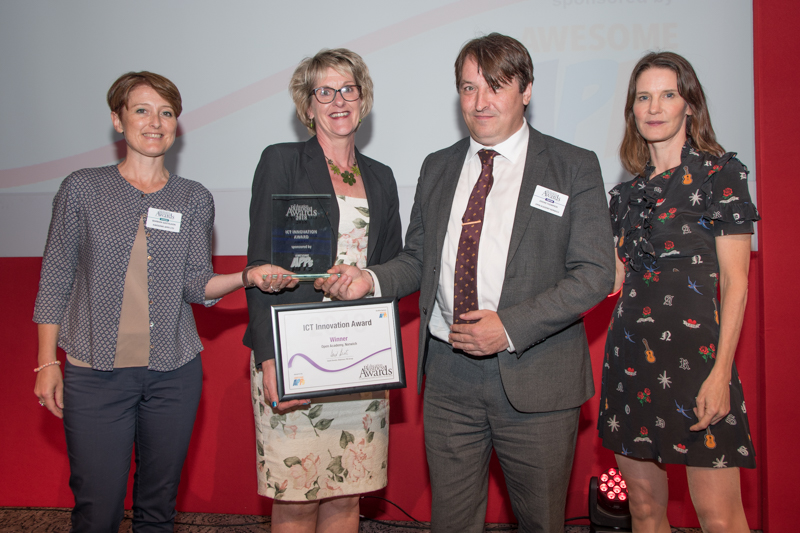
Open Academy’s ‘Project Refurb Club’ involves students refurbishing old PCs to distribute throughout the local community, a cause close to the hearts of both students and staff. The idea was devised by students in Years 7, 8 and 9 and championed by students in Years 10 and 11, who study Creative Media and Computer Science. This was achieved by integrating the project units. ‘Project Refurb’ is currently managed by ‘Digital Ambassadors’ in Years 7 to 13, whose roles are diverse and include mentors who teach at ‘Codeclub’ an after-school club to learn how to programme.
Commended
Ashmead Primary School, Buckinghamshire
Plashet School, Newham, London
Southlands School, Hampshire
2017 Winner
Deighton Primary School
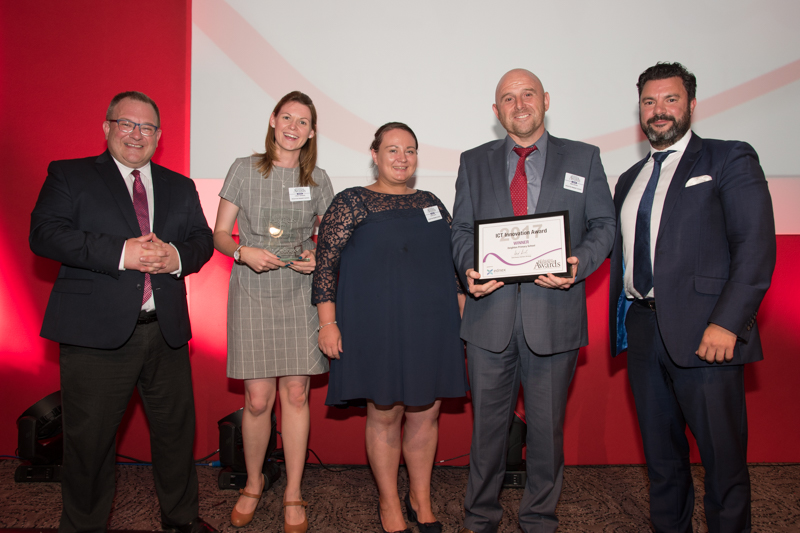
Deighton Primary School treats ICT as a core subject. 2017’s ‘Overdrive’ project with Cardiff Met’ University involves pupils working with students from the education and animation departments in developing a computer game based around driving. Next is a plan to build a working car with an electric motor. The project work this year has seen real-life working situations become part of the children’s school experience.
Commended
Rendcomb College
Moredon Primary School, Swindon
The Queen’s School, Chester
Heathfield Knoll School, Kidderminster
2016 Winner
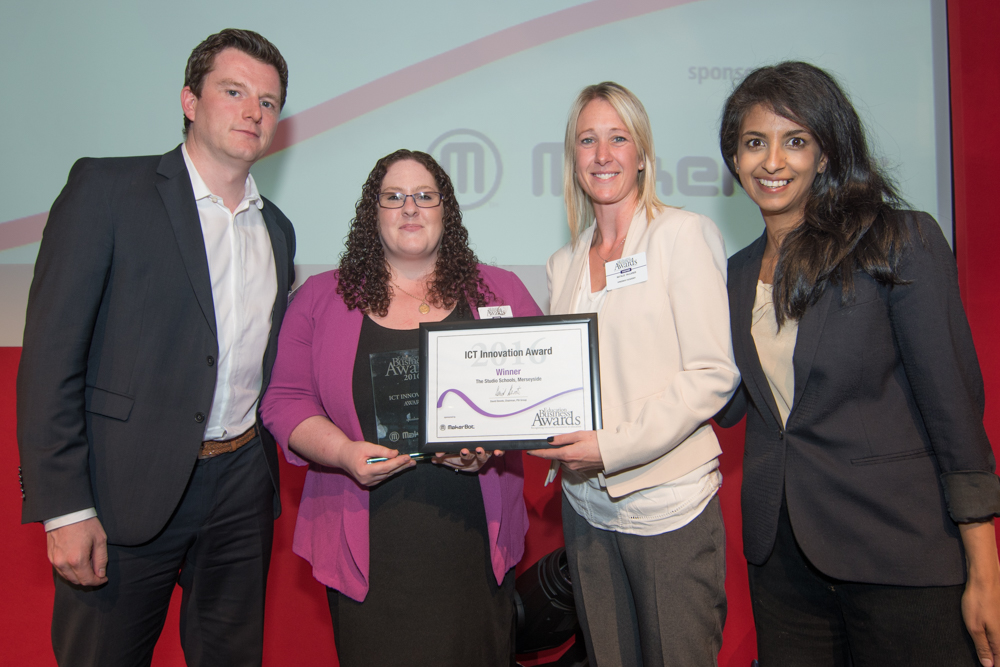
Studio Schools, Merseyside
The Studio focuses on developing students’ skills and the knowledge that students require to pursue a career in the digital sector, hosting a monthly series of Coder Dojo events working with primary aged children from across the North West. An industry mentor link shares real world experience and gauges students on a level that the curriculum doesn’t, and a monthly masterclass provides career possibilities.
Commended
Bolsover Church of England Junior School, Derbyshire
Shrewsbury High School, Shropshire
Westmorland Primary School, Lancashire
Plymouth School of Creative Arts, Devon
2015 Winner
Teesdale School, County Durham
Teesdale is a lead school in the Computing School’s Network. As the curriculum changed from ICT to Computing, Teesdale took the opportunity to share expertise with local students at the primary level, hosting computing days to help year 5 and 6 pupils with sequences of instructions and Scratch software.
Commended
Sandymoor School, Cheshire
Loughborough High School, Leicestershire
Boundary Oak School, Hampshire
Wick High School, Caithness, Scotland